
The 5 D’s of Real Estate: How Life Changes Can Shape Your Next Move
By Sarah Roberts, Broker Associate | Mosaic Realty Group
Most people don’t move simply because they wake up one morning and decide they want a different house.
More often, something in life changes first.
In real estate, the 5 D’s — Diamonds, Diplomas, Diapers, Divorce, and Death — are a simple way to describe major life transitions that can lead someone to reconsider where or how they live.
Some of these changes are exciting. Others are difficult. And not every one means you need to move.
But they can change the questions you need to ask about your home, your finances, your location, and what you need next.
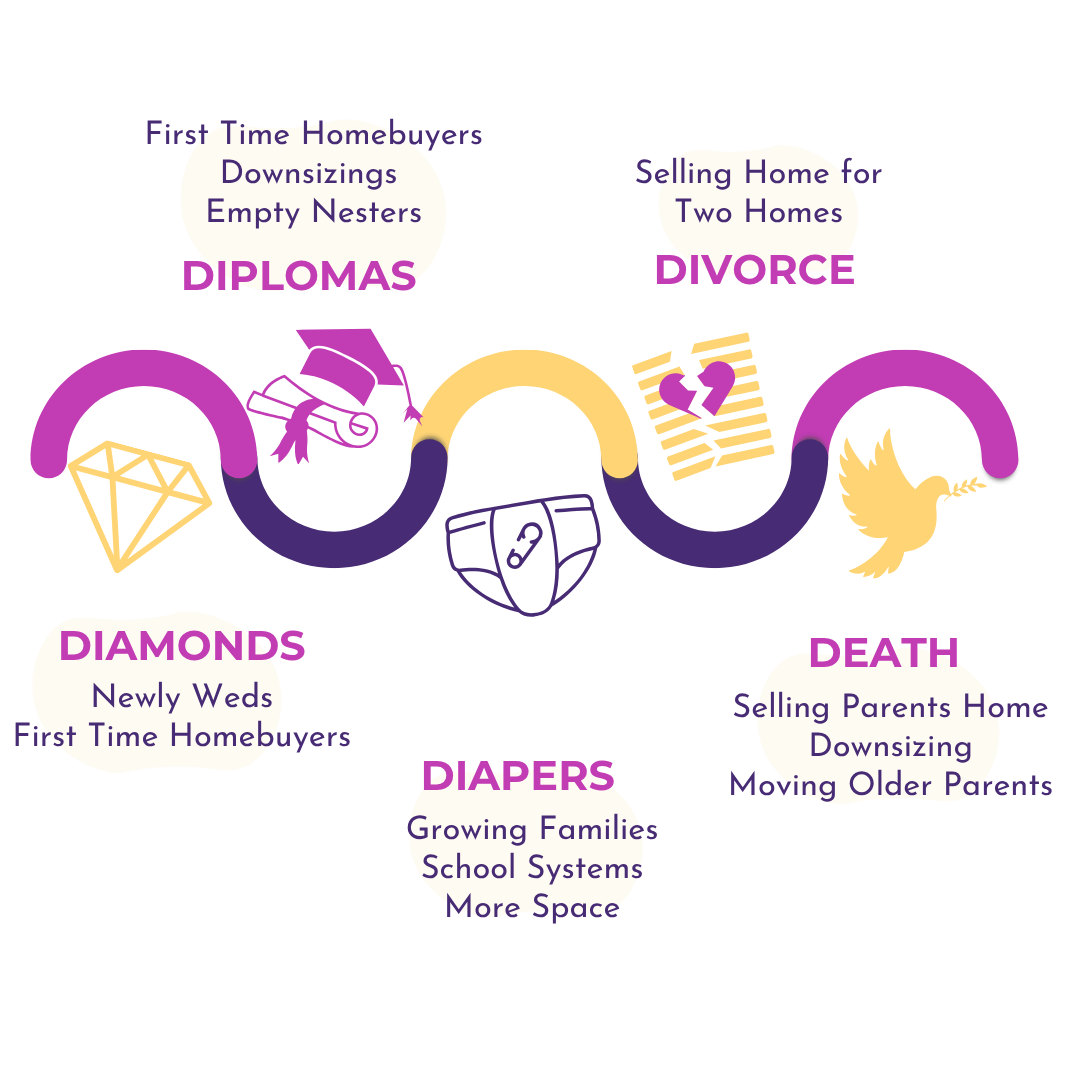
1. Diamonds: When Two Households Become One
Marriage or a long-term partnership can bring up a surprisingly complicated housing question:
Where are we going to live?
One person may already own a home. Both people may own homes. You may be renting separately and considering buying together for the first time.
Before jumping into a home search, it helps to look at the bigger picture.
Questions worth discussing include:
Does either person already own a home?
Would it make sense to sell, keep, or rent an existing property?
How much space do you actually need together?
Where do work, family, commute, and lifestyle fit into the decision?
What monthly housing cost feels comfortable?
If one or both of you already own a home, the decision can quickly become both a buying and selling conversation. Understanding your current home's value and your financing options first can make the next steps much clearer.
2. Diplomas: When the Next Stage Changes What Home Needs to Do
A diploma can represent several different transitions.
For a recent graduate, it may mean starting a career, relocating to DFW, or beginning to think about buying a first home.
For parents, a diploma may mean something completely different: the kids are leaving home, and suddenly rooms that were once essential aren't being used the same way.
That's why this stage isn't necessarily about buying a bigger or smaller house.
It's about asking:
Does our current home still fit the way we're living now?
An empty nester may decide the house still works perfectly. Someone else may want less maintenance, a one-story layout, a different community, or a home closer to family and the things they enjoy.
If you're considering that kind of change, Mosaic's downsizing and rightsizing resources can help you start exploring the possibilities before making any decisions.
3. Diapers: When Your Home Needs to Grow With Your Family
A growing family often changes how people experience their home.
The number of bedrooms may matter, but so can things you didn't think much about when you first moved in: storage, layout, yard space, commute, childcare, proximity to family, and how everyday routines work.
This is where we encourage families to look beyond square footage.
A larger house isn't automatically a better fit.
Sometimes a different floor plan solves the problem. Sometimes the location matters more than the extra bedroom. And sometimes the current home can work for several more years with a few thoughtful changes.
If moving does make sense, there's another important question:
Do you need to sell your current home before buying the next one?
That answer can affect your financing, home-search strategy, offer terms, and timeline. Our Buy and Sell in Sync guide explains some of the options homeowners can consider when both transactions are connected.
4. Divorce: When the House Becomes Part of a Bigger Decision
Divorce can make housing decisions particularly complicated because the home may be both a financial asset and a place with significant emotional meaning.
The right next step isn't always immediately selling the house.
Depending on the situation, possibilities may include selling the property, one person remaining in the home, or making another arrangement as part of the larger financial and legal process.
Before making real estate decisions, it is important to understand questions such as:
Who owns the property?
Is there a mortgage, and whose names are on it?
What is the home realistically worth in the current market?
What might the estimated proceeds from a sale look like?
Is one person considering keeping the home?
What timing needs to coordinate with legal or financial decisions?
A real estate professional can help with the real estate side of these questions, including understanding the home's potential market value, condition, selling timeline, and current competition.
Legal and financial questions should be discussed with the appropriate attorney, lender, tax professional, or financial advisor.
The goal is to gather good information before making a decision that can be difficult to undo.
5. Death: When a Family Home Becomes Part of an Estate or Transition
Losing someone you love can leave families with decisions they weren't expecting to make, including what happens to a home.
Sometimes the property needs to be sold as part of an estate. Sometimes a surviving spouse is deciding whether the home still works for them. Adult children may also find themselves helping a parent or managing a home that has been in the family for decades.
This is one situation where we especially encourage people not to begin with the house.
First determine who needs to be involved in the decision.
Depending on the circumstances, that could include family members, an executor, someone holding power of attorney, an estate attorney, financial professionals, or other advisors.
Once that is clear, the real estate questions become easier to organize:
What is the home worth? What condition is it in? Does anything actually need to be repaired before selling? What should happen to the belongings? How quickly does anything need to happen?
There may be several decisions, but they don't all need to be made on the same day.
For families helping an older parent consider a move, our guide to supporting a parent's downsizing is a helpful place to begin.
The 5 D’s Have One Important Thing in Common
Diamonds, Diplomas, Diapers, Divorce, and Death may seem like very different life events.
From a real estate perspective, however, they have something important in common:
Life changed first. The housing decision came second.
That's why we don't think the first question should automatically be, Should I buy? or Should I sell?
A better starting point is:
What has changed, and what does my home need to do for me now?
Your answer may depend on your finances, how much equity you have, the condition of your current home, where you want to live, your family, your commute, your timeline, and what's available in the communities you're considering.
Here in DFW, even nearby communities such as Lewisville, Flower Mound, Highland Village, and The Colony can offer different housing options, commute considerations, property taxes, HOA structures, home ages, and lifestyles.
Those details matter when you're deciding whether moving actually improves your situation.
Before You Decide to Move, Start With These Questions
If life has changed and you're wondering whether your home should change with it, you don't need to have the entire plan figured out.
Start here:
What isn't working anymore?
Think about the home itself, but also your daily routine, location, maintenance, commute, finances, and lifestyle.
What would you want to be different?
More space? Less upkeep? A one-story home? A different commute? Closer proximity to family?
What does your current home make possible?
Understanding its approximate market value, mortgage balance, and potential equity can help you see what options may be realistic.
What needs to happen first?
For some people, that's talking with a lender. For others, it's understanding the value of their current home, speaking with an attorney or financial advisor, or simply exploring neighborhoods and housing options.
You don't have to begin by deciding whether to move.
You can begin by understanding your choices.
Not Sure What Your Life Change Means for Your Home?
This is where Mosaic can help.
If something has changed and you're unsure what to do with your current home, we can help you understand its potential market value, what selling could look like, what housing options may fit your next stage, and how the timing of one decision could affect another.
Sometimes that leads to a move. Sometimes it helps you realize staying where you are makes more sense right now.
Either way, the goal is to have enough information to make the decision thoughtfully.
FAQ About the 5 D's of Real Estate
What are the 5 D's of real estate?
The 5 D's are Diamonds, Diplomas, Diapers, Divorce, and Death. They are a common real estate shorthand for major life events that can change someone's housing needs and lead them to consider buying, selling, downsizing, or relocating.
Does a major life change mean I should sell my home?
No. A life change is a reason to reevaluate your housing needs, not automatically a reason to sell. Consider your finances, current home, location, lifestyle, timeline, and future plans before deciding whether staying or moving makes more sense.
What should I do first if I'm thinking about moving after a life change?
Start by identifying what has changed and what you need your home to do differently. From there, understanding your current home's value, your finances, and your possible next-home options can help you compare staying versus moving.
Should I buy a new home before selling my current one?
It depends on your finances, available inventory, timing, and comfort level. Some homeowners sell first, some buy first, and others coordinate both transactions. A lender and real estate agent can help you understand which options are realistic for your situation.
What should I know about selling a home during a divorce?
Before selling, understand the property's ownership, mortgage, approximate market value, potential sale proceeds, and any legal requirements affecting the home. A real estate professional can help with the property and sale, while legal and financial decisions should be discussed with the appropriate professionals.
What should a family do with a home after someone dies?
First determine who has legal authority to make decisions about the property. Depending on the situation, an executor, attorney, family members, or other professionals may need to be involved. Once that is clear, you can evaluate the home's value, condition, belongings, timeline, and whether selling makes sense.
How do I know if it's time to downsize or rightsize?
Consider whether your current home's space, stairs, maintenance, costs, location, and layout still fit the way you want to live. Rightsizing is less about reaching a certain age or square footage and more about choosing a home that better supports your current and future needs.
A Note From Sarah
Your home should support the life you're actually living now.
I wanted to share the 5 D's because they remind us that real estate decisions usually start with something much more personal than a house. If life is changing, you don't need to know exactly what comes next. Start with the questions, understand your options, and build the plan from there.
Helpful Resources for Your Next Step
Selling Your Home: Understand the Process
If a life change may require selling, start with the steps, timing, preparation, and decisions involved in a home sale.
Buying and Selling at the Same Time
If your next move depends on selling your current home, explore how the two transactions can be planned together.
Buying Your First Home
If marriage, graduation, a new job, or another life transition has you considering your first purchase, this guide walks through what to expect.
Rightsizing With Confidence
If your current home no longer fits your lifestyle, explore what to consider before moving to something simpler or easier to maintain.
Helping a Parent Downsize
For adult children helping a parent make housing decisions, this resource offers a gentler place to start the conversation.
Life changes don't always require a move. But when they change what you need from home, understanding your options early can make whatever comes next much easier to plan.
