
A pre-listing home inspection can help Texas sellers discover concerns early and plan repairs, but it isn't necessary for every home. It costs money, may reveal conditions that need to be disclosed, and won't replace a buyer's inspection. The best choice depends on your home's condition, maintenance history, budget, and selling timeline.
What is a pre-listing home inspection?
It's a home inspection the seller arranges before listing the property. The inspector evaluates visible and accessible systems and components within the agreed scope, then provides a report of observed conditions.
It's not an appraisal or a guarantee that every issue will be found. A buyer may still hire their own inspector.
What are the benefits and drawbacks of inspecting before listing?
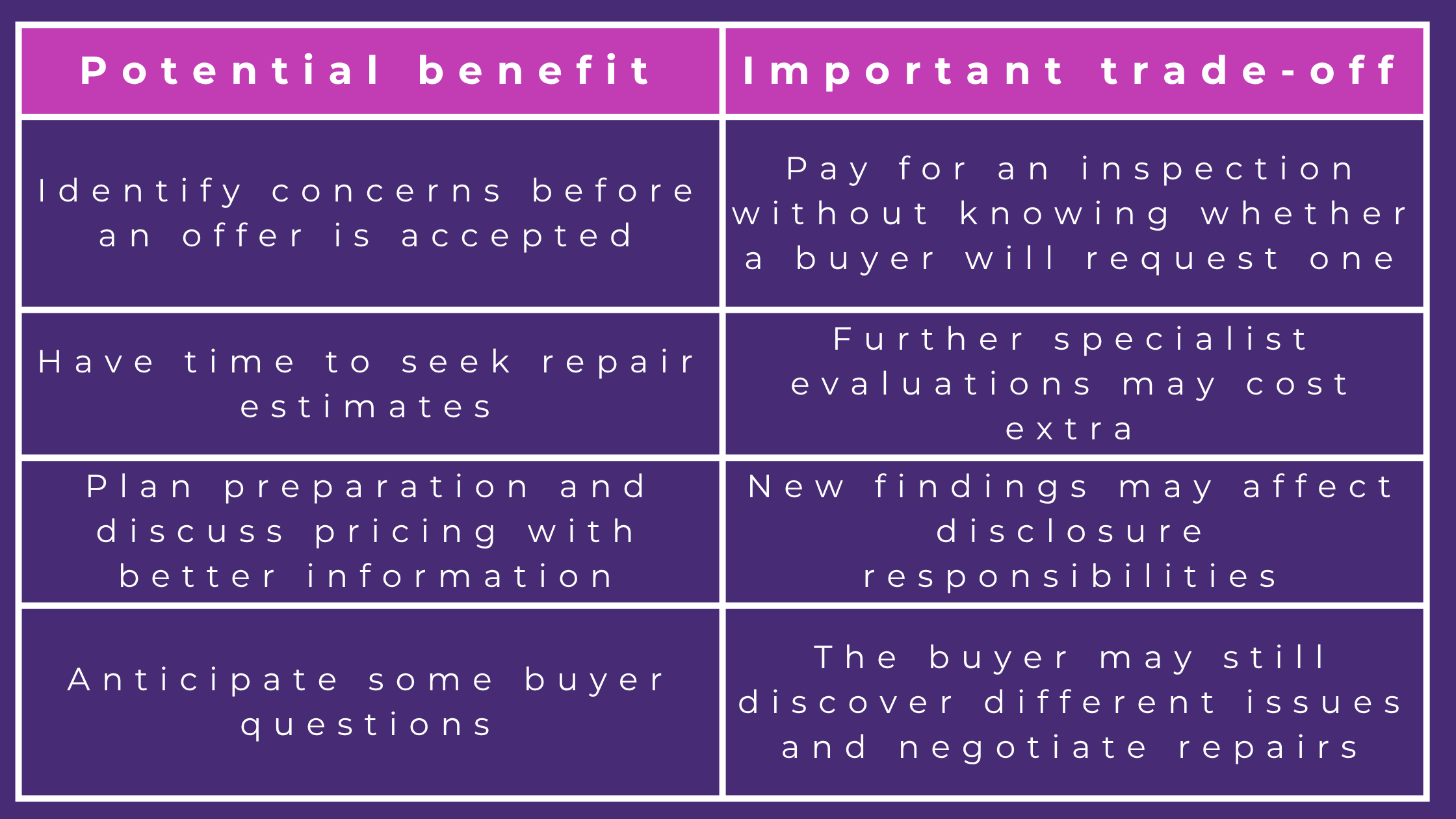
Could the inspection affect what you must disclose in Texas?
Yes. Under Texas Property Code §5.008, many sellers of single-unit residential property must give buyers a notice about their knowledge of the property's condition, although exemptions exist. The Texas Real Estate Commission's Seller's Disclosure Notice is one form used for this purpose.
The Texas REALTORS® guidance on prior inspection reports explains that material defects learned through an inspection must be disclosed to subsequent prospective buyers. Its own disclosure form also requests certain prior inspection reports.
That doesn't mean you must repair every finding. It does mean that learning about a condition and deciding whether to fix it are separate from your disclosure responsibilities. For transaction-specific legal questions, consult a qualified Texas real estate attorney.
When might a full pre-listing inspection make sense?
It may be worth considering when:
You aren't sure about the condition of several major systems.
The home is older or has gaps in its maintenance history.
You know of several concerns and want a broader picture.
You have time before listing to investigate findings and compare repair estimates.
A pre-listing inspection won't guarantee a quicker sale or prevent negotiations. Its value is in giving you information while you still have time to plan.
When might a targeted evaluation be a better first step?
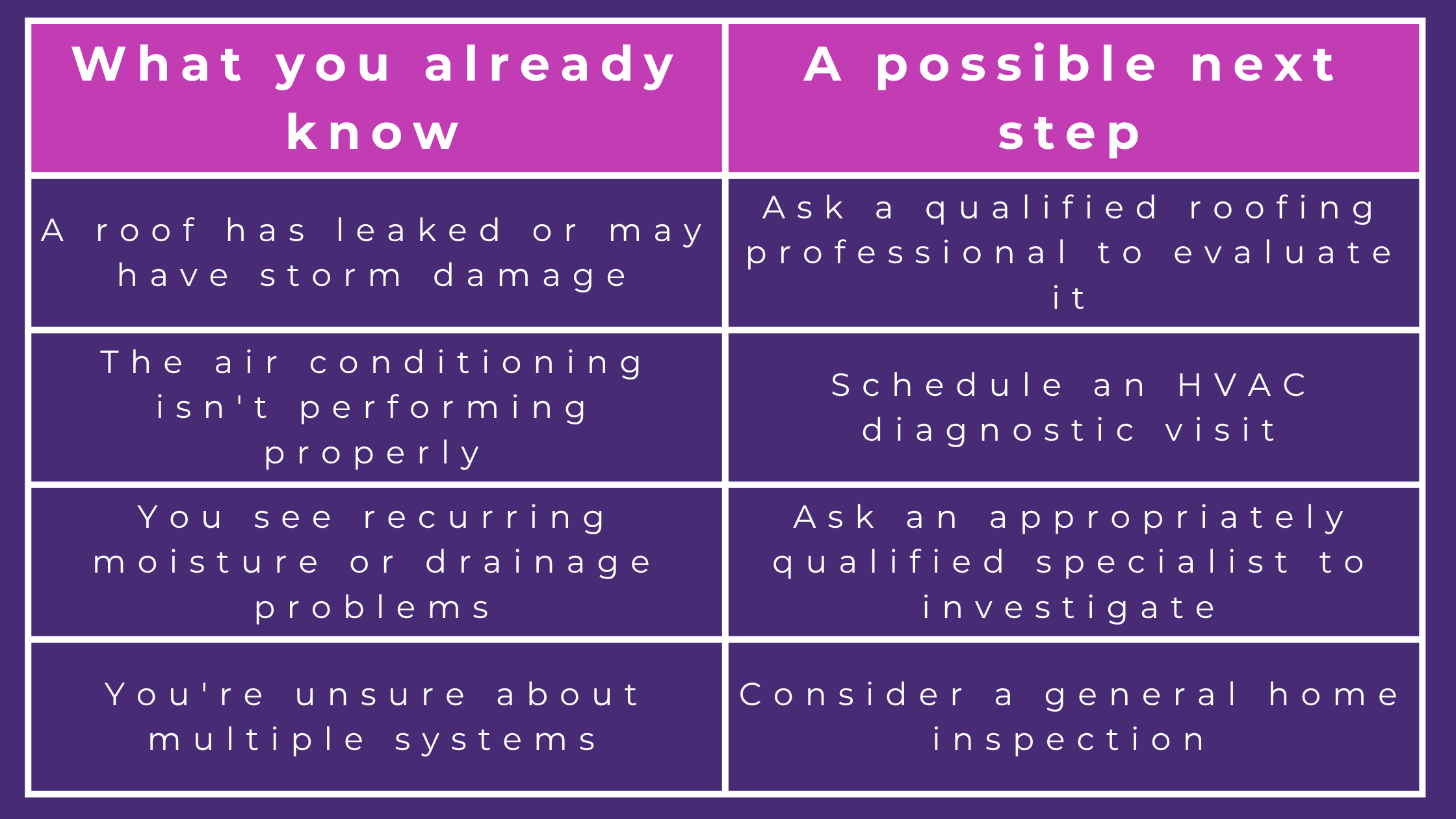
The question is not just “Should I inspect?” It's “What do I need to know before I decide what to do?”
What should sellers in Lewisville, Flower Mound, and Highland Village consider?
For North Texas homes, roof history after hail or wind events, HVAC maintenance, drainage, previous repairs, and known foundation-related concerns can be useful parts of the preparation conversation. Those are areas to review, not claims that your particular home has a problem.
Local pricing and comparable homes also matter. If you're weighing inspection costs against other preparations, consider which information or repairs would actually affect your listing plan. A home-selling plan tailored to your property should account for the condition of the house and your timeline, not just a standard checklist.
How much does a pre-listing inspection cost?
There isn't one reliable price for every North Texas home. Fees depend on property size, age, scope, and the inspector. Pool, sewer, or other specialist evaluations may be separate.
Request a written quote and ask what's included. Before spending the money, identify the decision the inspection would help you make.
What if the inspector finds a problem?
Understand the finding. Ask what was observed and what remains uncertain.
Get the right professional opinion. A specialist may need to diagnose the issue and recommend options.
Compare estimates and timing. Decide whether a repair makes sense before listing.
Review disclosure obligations. Don't assume an unrepaired condition can be omitted.
Revisit your preparation and pricing plan. Consider the issue alongside comparable homes and your selling goals.
You don't have to treat every note in an inspection report as an emergency. You do need to make informed decisions.
Will buyers still order their own inspection?
They may. A seller's inspection does not replace the independent evaluation a buyer may choose to obtain. Two inspectors may also report different observations, so an early inspection cannot eliminate every possible surprise.
What should you do before paying for an inspection?
Start by writing down what you know about the home, any specific concerns, your recent service or repair records, and when you want to move. Then decide whether a general inspection, one specialist visit, or a different preparation step would help most.
If you're preparing to sell, Mosaic's home-selling guidance can help you start that planning conversation around your actual property.
A next step that fits your home
Not sure whether an inspection belongs on your pre-listing checklist? Start with a home-selling conversation. Tell us about the house, your concerns, and your timeline so we can help you think through which evaluations or preparations make sense before spending money.
By Sarah Roberts, Broker Associate | Mosaic Realty Group
A good selling plan starts with understanding your home.
I wouldn't automatically tell every seller to order an inspection. Sometimes a full report is useful; sometimes one targeted evaluation answers the important question. I'd rather understand the property and your goals first, then help you decide what deserves your attention.
Helpful Resources for Your Next Step
Pre-Listing Inspection: Pros and Cons — Mosaic's companion guide for weighing the decision.
Plan Your Home Sale — How to prepare for selling with a plan that fits your home.
Understand Your Home's Value — Start considering how your home fits the local market.
Frequently Asked Questions About Pre-Listing Home Inspections
Is a pre-listing inspection required in Texas?
Generally, a seller is not required to order an inspection before listing. Seller disclosure requirements are a separate matter and exemptions may apply.
Will the buyer still get an inspection?
Possibly. Buyers may choose their own inspection, even if the seller has already obtained one.
Do I have to disclose what my inspection finds?
Known material conditions may need to be disclosed. The disclosure form and transaction matter. Texas REALTORS' disclosure form also asks about certain prior inspection reports.
Do I have to fix everything the inspector finds?
No. Repairs and disclosure obligations are different decisions. You can evaluate estimates, timing, and your selling plan.
How much does a pre-listing inspection cost?
Costs vary with the property and scope. Request a written quote from a local inspector and ask about additional specialist evaluations.
Would a specialist be better than a full inspection?
If you have one known concern, such as an HVAC problem or a roof leak, a qualified specialist may provide more targeted information.
