
Room-by-Room Home Staging Tips Before You Sell
By Ria Joy Wilds, REALTOR® | Mosaic Realty Group
If you’re staging your home before selling, start with a simple goal: make each room easy for buyers to understand.
That usually means removing excess furniture and clutter, cleaning thoroughly, letting in as much light as possible, and making sure each space has a clear purpose.
You do not need to make your home look like nobody lives there. And you certainly don’t need to buy a house full of new décor.
Good staging is really about helping buyers notice the home—not everything inside it.
Here’s how to work through your home one room at a time.
Before You Stage: Start With the Whole House
Before worrying about throw pillows or what belongs on the kitchen counter, take care of the basics.
Start with:
Decluttering rooms, closets, countertops, and other visible spaces
Removing excess furniture that makes rooms feel crowded
Deep cleaning throughout the home
Taking care of noticeable maintenance or repair items
Replacing burned-out light bulbs
Opening blinds and curtains where appropriate
Removing highly personal or distracting items
Looking at the home from a buyer’s perspective
One thing we encourage sellers to do is wait before spending money on staging or cosmetic projects.
A home may need less than you think. Another may have a few areas where your time and money would be better spent.
Before buying new furniture, repainting several rooms, or tackling a long project list, it can help to have someone walk through the home with you and prioritize what actually matters.
Entryway: Make the First Few Steps Feel Easy
The entry does not need much décor. It needs to feel clean, open, and welcoming.
Remove extra shoes, bags, coats, and anything that makes the area feel crowded.
If there is room, a simple console, piece of art, or small plant can give the space some warmth without becoming the focus.
Pay attention to what buyers see before they even step inside, too. Sweep the porch, clean the front door, check exterior lights, and remove anything that makes the entrance feel cluttered.
The goal is simple: nothing should distract from a good first look at the home.
Living Room: Show the Space and the Flow
The living room should help buyers understand how the room functions and how easily they can move through it.
Too much furniture can make a good-sized room feel smaller than it is.
Consider removing extra chairs, side tables, large décor, toys, or other pieces that interrupt natural walkways.
Then look at your furniture arrangement.
Does it make sense for the room? Can buyers easily walk through? Does it highlight a fireplace, windows, built-ins, or another feature worth noticing?
Keep surfaces relatively simple, straighten pillows and throws, and let in natural light where possible.
You’re not trying to make the room empty. You’re giving the home itself a little more room to show.
Kitchen: Clear the Counters Without Making Them Bare
Kitchens can collect a lot of everyday life: appliances, mail, vitamins, dish racks, coffee supplies, school papers, water bottles.
Most of those things should find a temporary home while your house is being photographed and shown.
Clearing the counters helps buyers see how much workspace is actually available.
That doesn’t mean every counter has to be completely empty. A coffee maker, simple bowl, or another small item may be perfectly fine if it helps the kitchen feel natural rather than staged within an inch of its life.
Also pay attention to:
The sink and faucet
Appliance fronts
Cabinet surfaces
Pantry organization
Trash cans
Refrigerator magnets, papers, and photos
Under-cabinet and overhead lighting
And before replacing hardware, painting cabinets, or starting another cosmetic project, decide whether the update is actually necessary for your home and selling plan.
Dining Room: Make Its Purpose Obvious
Whether you have a formal dining room, breakfast nook, or one dining area, buyers should immediately understand what the space is for.
Keep the table proportional to the room and remove extra chairs if the space feels crowded.
A simple centerpiece is plenty.
If your dining room has gradually turned into a home office, homework station, craft area, or storage room, consider returning it to its intended purpose while the home is on the market.
You want buyers to understand the floor plan without having to figure it out.
Primary Bedroom: Calm, Clean, and Uncomplicated
A bedroom doesn’t need hotel-style staging to show well.
Start with the basics:
Make the bed neatly
Simplify bedding if it feels busy
Clear nightstands and dressers
Remove excess furniture
Put away laundry and everyday personal items
Open curtains or blinds when appropriate
Make sure lamps and overhead lights work
Pay attention to scale, too.
If a large chair, dresser, or extra piece of furniture makes it difficult to move around the room, temporarily removing it may help buyers better understand the available space.
Secondary Bedrooms: Give Each Room a Clear Job
Secondary bedrooms don’t all have to look the same.
A child’s bedroom can still look like a child lives there. A guest room can remain a guest room.
The important thing is to control clutter and make the size and function of the room easy to see.
If a bedroom currently serves several purposes—office, storage room, gym, guest room and everything else—choose one primary purpose for staging.
That gives buyers a clearer picture of what they could do with the space.
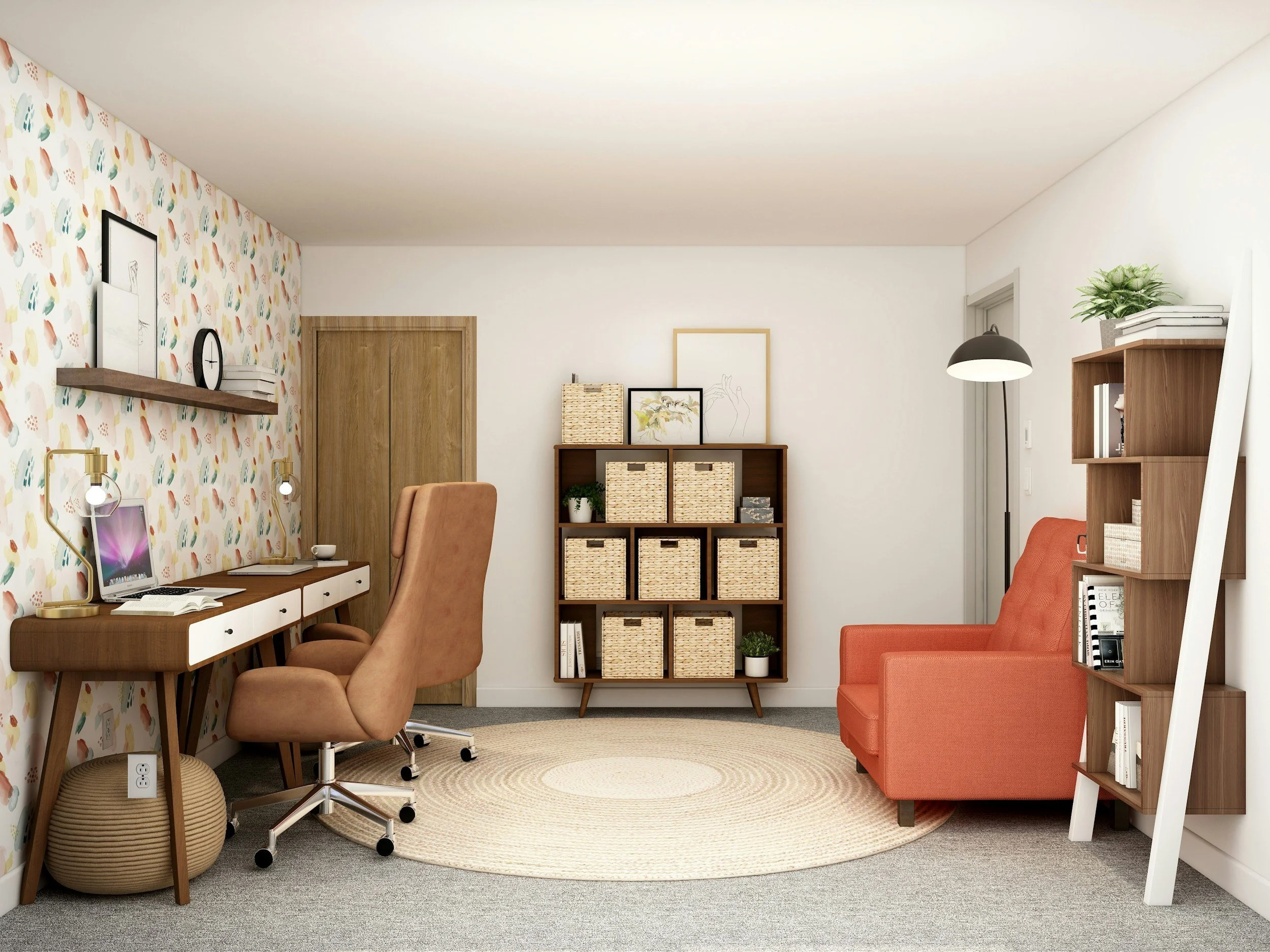
Home Office: Keep It Functional
If your home has a dedicated office, show buyers that it functions comfortably as one.
Keep the desk surface simple, organize cords, put paperwork away, and remove personal or confidential documents before showings.
For homes without a dedicated office, don’t force one into a space where it makes the room awkward.
Sometimes showing a bedroom well as a bedroom is more useful than squeezing a desk into the corner just to say the home has workspace.
Bathrooms: Clean Matters More Than Decorating
Bathrooms are one area where cleanliness does most of the staging work for you.
Clear countertops of everyday toiletries, medications, toothbrushes, hair tools, and other personal items.
Then focus on the details:
Clean mirrors and glass
Scrub showers and tubs
Clean grout and caulk
Put out clean towels
Close toilet lids
Empty trash cans
Check lighting
Remove excess products from showers and tubs
A small plant or simple accessory is fine, but don't overthink it.
A sparkling bathroom will do more for you than a perfectly folded stack of decorative towels.
Closets: Yes, Buyers May Look Inside
You don’t need an empty closet.
In fact, buyers expect you to have belongings.
But an overfilled closet can make it harder to see the storage space itself.
Pack away out-of-season clothing and items you won’t need before the move. Organize shelves and floors enough that buyers can see the closet’s size and layout.
This has another benefit: you’re getting a head start on packing.
Kids’ Rooms: Keep the Personality, Control the Clutter
You do not need to erase every sign that children live in the home.
Instead, simplify.
Put away some toys, organize what remains, clear the floor, and remove anything that overwhelms the room visually.
If shelves and storage are built into the room, keeping them reasonably organized can also help buyers see how useful those features are.
The room can still feel fun. Buyers just need to be able to see the room underneath everything in it.
Laundry Room and Utility Spaces: Don’t Forget Them
Laundry rooms tend to become holding areas for everything that doesn’t have another place to go.
Before listing, clear the floor, put away cleaning products where possible, remove empty boxes and miscellaneous storage, and clean the washer and dryer.
If the room has cabinets, shelving, a sink, or useful storage, make sure buyers can actually see those features.
Small spaces deserve attention, too.
Garage: You Don’t Have to Empty It
Your garage can still have things in it.
Moving boxes are normal when you're selling a home.
The goal is to organize enough that buyers can understand the garage itself. Keep walkways clear and avoid stacking belongings where they hide important features or make it difficult to see the space.
If you need somewhere to put packed boxes while preparing your home, an organized section of the garage may make more sense than filling a bedroom or living area with them.
Outdoor Spaces: Show Buyers How They Can Be Used
Patios, porches, yards, and other outdoor living areas are part of the home presentation too.
Start by cleaning rather than decorating.
Sweep patios, remove broken or unused items, trim landscaping where needed, straighten outdoor furniture, and clean up pet waste before showings.
If you already have an outdoor seating or dining area, arrange it so buyers can understand how the space is used.
You don't need to build an outdoor living room just for the listing.
Work with what you already have.
Should You Buy New Décor or Furniture for Staging?
Usually, that shouldn’t be your first step.
Before buying anything, work with what you already own. Removing, rearranging, cleaning, and simplifying can make a significant difference.
If your home needs more help, professional staging or bringing in selected pieces may be worth discussing. But that decision should be based on the home, price range, existing furnishings, local competition, timeline, and overall selling strategy.
The goal isn’t to spend the most money preparing your home.
It’s to spend your time and money where they actually make sense.
What Should You Do Before Staging Your DFW Home?
If you're preparing to sell in Lewisville, Flower Mound, Highland Village, Denton County, or elsewhere in DFW, staging shouldn't happen in isolation.
Your home’s condition, price range, competing listings, and selling timeline can all affect what preparation makes sense.
Before starting a long list of projects, we prefer to walk through the home as it is.
We can help you separate the list into:
Do this.
Consider this.
You can probably skip this.
That can be much more useful than assuming every room needs new paint, furniture, or décor before you can sell.
If you’re wondering what your home needs before going on the market, Mosaic can help you build a preparation plan around your actual home, your timeline, and the buyers you’re likely to be presenting it to.
FAQ About Staging a Home Before Selling
How should I stage my house before selling?
Start by decluttering, deep cleaning, removing excess furniture, improving lighting, and making the purpose of each room easy to understand. You do not need to completely redecorate your home. The goal is to help buyers notice the home's space, layout, condition, and features without unnecessary distractions.
Do I need to stage every room before selling my house?
Every room should be clean and easy for buyers to understand, but that does not mean every room needs professional staging or new décor. Focus first on the entry, main living areas, kitchen, primary bedroom, bathrooms, and any spaces that are difficult to understand or feel crowded.
Should I remove all personal items when staging my home?
No. Your home does not have to look like nobody lives there. Put away highly personal or distracting items, confidential paperwork, excess photos, and everyday clutter, but a home can still feel comfortable and lived in. The goal is to keep the focus on the house itself.
Should I buy new furniture or décor to stage my home?
Not necessarily. Start by cleaning, decluttering, removing excess furniture, and rearranging what you already own. If additional furniture or professional staging would improve the presentation, that decision can be made based on your home's condition, price range, existing furnishings, competition, and selling strategy.
What should I leave on kitchen counters when staging?
Keep kitchen counters mostly clear so buyers can see the available workspace. A few practical or simple items, such as a coffee maker or bowl, may be fine. Put away paperwork, small appliances you do not use daily, dish racks, medications, and other items that make the counters feel crowded.
Do buyers look inside closets when viewing a home?
They may. You do not need to empty your closets, but organizing them can make it easier for buyers to understand the available storage. Packing out-of-season clothing and items you will not need before moving can create more breathing room while also giving you a head start on packing.
Should I stage my home before talking to a real estate agent?
You do not have to. In many cases, it can be helpful to have a real estate professional walk through the home before you spend money or start major projects. They can help you prioritize cleaning, repairs, staging, and cosmetic updates based on the home, local competition, your timeline, and your selling goals.
A Note From Ria

You probably need to do less than you think.
I’d much rather walk through your home before you spend a weekend repainting rooms or buying things you may not need. Sometimes a few thoughtful changes are enough. We can look at it together, decide what matters, and make a plan that feels manageable.

Helpful Resources for Your Next Step
If staging is on your mind because a home sale may be coming, these Mosaic resources can help you decide what should happen next.
How Mosaic Helps You Sell Your Home — See how we approach home preparation, presentation, marketing, and the selling process from the first conversation through closing.
What Home Improvements Add Value Without a Major Renovation? — Before spending money preparing your home, use this guide to think through smaller repairs, maintenance, paint, lighting, curb appeal, and cosmetic updates.
Seller Resources & Guides — Find Mosaic's seller resources for preparing your home, understanding the process, and planning what comes next.
The Local Market Report — See the latest DFW and Denton County market information and why your neighborhood, price range, condition, and competition matter when preparing to sell.
